
ESSENTIAL ROCK MUSIC OF DETROIT


Detroit's influence on rock music is about as high as its murder rate.  Even when you take Motown out of the equation, the Motor City is still a music city like no other.  Why, Detroit pretty much brought rock and roll to mainstream audiences with Bill Haley's "Rock Around The Clock."  Later, the city very nearly invented punk music with groups like The Stooges and MC5 (Motor City 5).  Next, let's think about the hard rock that dominated the airwaves in the 70s.  Ted Nugent, Alice Cooper, Grand Funk Railroad, Brownsville Station—they're all Motor City bands.  Oh, but there were also heartland rockers like Bob Seger in Detroit.  If you fast forward to the 90s and the early 2000s, you have popular icons—and Detroit natives—like Kid Rock and The White Stripes.  And then just this year, our hearts were captured by a formerly unknown singer/songwriter from Detroit named Rodriguez.  Indeed, the weather may be cold, but the music is red hot.  Let's listen to some of the hottest music Henry Ford's city ever made.

 Bill Haley & His Comets


(Iggy Pop And) The Stooges

MC5 (Motor City 5)

 Ted Nugent

Alice Cooper

Grand Funk Railroad

Brownsville Station

Bob Seger And The Silver Bullet Band

Kid Rock

The White Stripes

Rodriguez
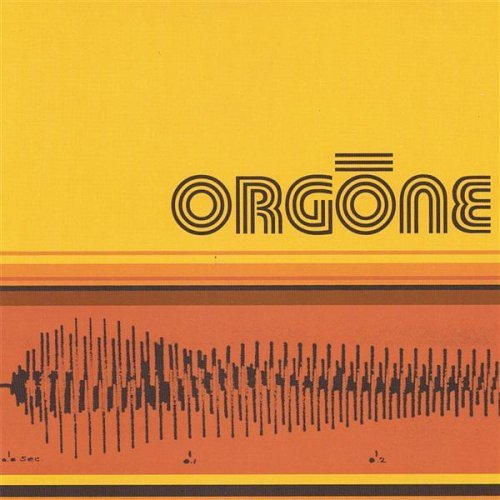
The Heady Funk of Orgone

Orgone+First+Album.jpg

SOME CONTEXT

Since forming in 2001, the LA funk-revival ensemble known as Orgone has made quite a name for itself.  You may not have heard of them, but artists like CeeLo Green and Alicia Keys have and were so impressed that they used Orgone as a backing band on some of their best recordings.  

Over the last several years, they have added a singer—a former Macy Gray backing singer—named Nicki J. Crawford and have been a very popular act on the festival circuit, playing sets at Bonnaroo and Wakarusa fests, for example.

THE REVIEW

These guys idolize bands like The Meters and Parliament/Funkadelic, but on their 2001 self-titled debut they take the groove off of your booty and into your head.  It's very cerebral stuff, the kind of music that elicits chilling more than dancing.  This is no more evident than on "Deep Wank," which channels the mellowest of a Sublime influence.  Keeping it mellow may disappoint fans of Orgone's later, more pulsating rhythmic work, however, the slow stuff is really ambitious. Orgone is a vocal-less record, but it's incredibly focused. They keep the grooves simple and jam gently, letting the Rhodes, phasers and effects wash over the riffs.  Fans of jazz-fusion pioneers like Joe Zawinul should take note of pianist Dan Hastie's expert keys and his wonderful interplay with guitarist Sergio Rios.  Even when Orgone get loud, as they do on the last minute, brilliant crescendo of "Captain's Log,"  it never sounds like they're losing control or overplaying.  Instead, Orgone feels—paradoxically—both calculated, yet not the least bit rigid.   It showcases a group that has the chemistry of industry pros who have been playing together for years.   The result is somewhat essential "chill" music and a wonderfully understated debut album. 

Orgone

SINGLES GOING STEADY: "WALKING ON THE MOON"/ "DRIVEN TO TEARS"/ "WHEN THE WORLD IS RUNNING DOWN (YOU MAKE THE BEST OF WHAT'S STILL AROUND)" BY THE POLICE

1979-the-police-live.jpg

The Police

There are four discernible versions of The Police.  There's the reggae/punk infusion of their early work with hits like "Roxanne" and "So Lonely," the transformation to the slick, polished, new wave of albums like 1979's Regatta De Blancand 1980's Zenyatta Mondatta, the synthesizer-heavy bubblegum of "Every Little Thing She Does Is Magic" and the impressive pop craftsmanship of the global hit "Every Breath You Take." This diverse body of work is impressive on its own, but its mind boggling that such genre bending and orignality occurred in less than 10 years,  turning Sting & The Police into global superstars in the process.  The trio was both technically outstanding and brilliant in the songwriting department and their success should surprise nobody.

The heart and soul of the Police was Sting.  He was a terrific frontman of unheard of talent who was responsible for writing nearly every hit entirely on his own.  But, unfortunately, it was his talent that probably broke up the squad.  It frustrated drummer Stewart Copeland and guitarist Andy Summers who also wrote plenty of songs.   Many of those songs ended up on the records without any participation from Sting who adamently refused to perform on them.  Around 1986, Sting's ego—if not his talent—led him to an epiphany most frontman encounter in their careers.  "I don't need these guys," he probably said to himself.  "I can make music all on my own."  And that he did.

Though guitarist Andy Summers has received plenty of praise—ask any talented musician—he is still underrated by the masses.   There are three songs credited solely to Sting which should also be attributed to Andy Summers. These songs collectively make up what I like to call "the fifth discernible version of The Police."  They are "Walking On The Moon,"  "Driven To Tears" and "When The World Is Running Down (You Make The Best Of What's Still Around)"

All of these songs have something in common—the chorus-filled guitar of Andy Summers, which crashes and slices in perfectly-timed down strokes like a chopping butcher knife.  There's hardly a real chord progression amongst them. They're more like chord flashes, striking throughout the songs like lightning.  Sting may have written the melodies and the lyrics, but Summers makes these songs with his guitar.  I'd like to think that it was his ethereal performances that made people fall in love with these songs in the first place.  

P.S. Watch out for one of his few recorded guitar solos on "Driven To Tears."